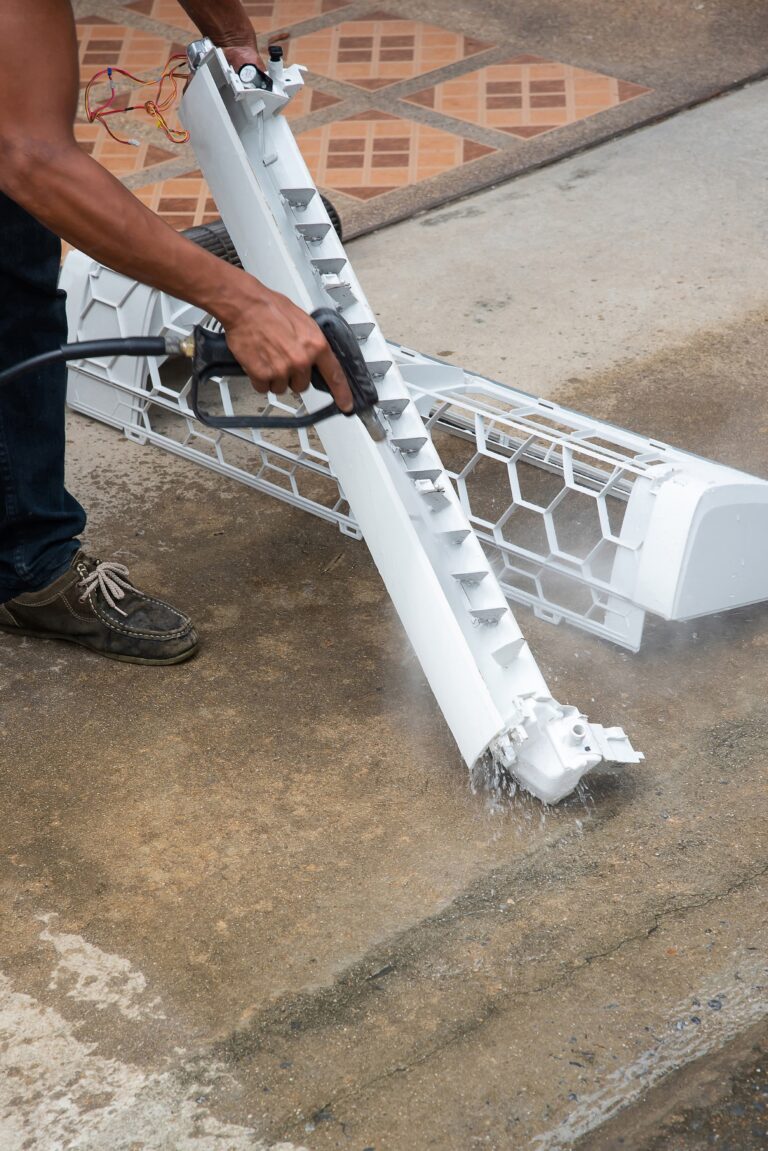
AC coil cleaning is a crucial part of maintaining your air conditioning unit. When the coils are dirty, it can cause your AC to work harder and become less efficient, leading to higher energy bills.
Two types of coils facilitate the cool air that flows from your AC system:
- Condenser coil: It is found on the outdoor part of the cooling system and facilitates heat transfer from indoors and move it outside
- Evaporator coil: It is found within the indoor part of the cooling system, and its function is to cool indoor air.
Regularly cleaning these coils can help extend the lifespan of your AC, keep it running smoothly, and improve its efficiency. In this article, we’ll explain the importance of cleaning your AC coils, how often it should be done, and why it’s a good idea to hire a professional for the job.
AC coil cleaning is a crucial part of air conditioning maintenance. Dirty coils can make your AC work harder, resulting in lower efficiency and higher energy bills.
Let’s look at the types of AC coils, the effects of dirt on coils, and how regular cleaning can help extend the lifespan of your cooling unit.
What are the different types of AC coils?
Air conditioning involves two types of coils, evaporator coils and condenser coils. As primary heat exchangers in an AC system, these two work in tandem to move thermal energy.
Evaporator Coils
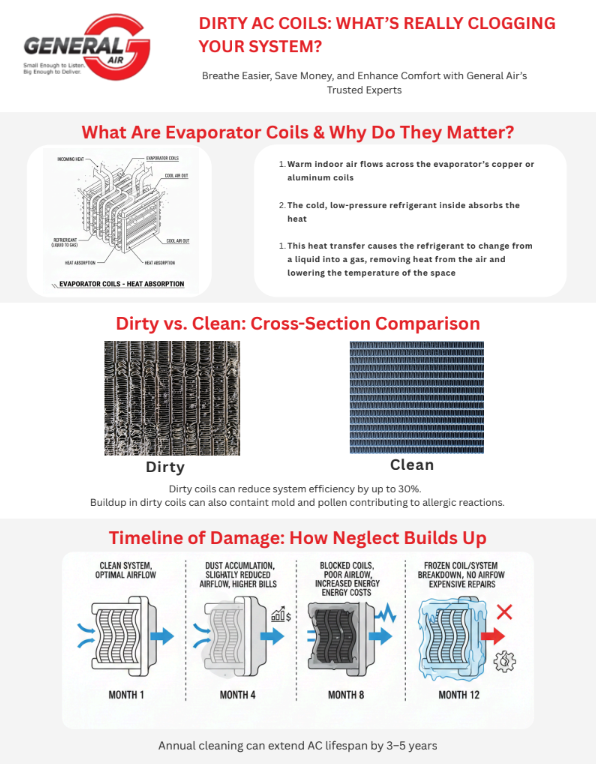
The evaporator coil is the indoor component of a cooling system. It works by:
- Lowering the temperature of the liquid refrigerant flowing inside the coil.
- Absorbing heat and humidity from the air, causing the refrigerant to turn into a gas.
- Dehumidifying the warm air.
- Releasing the absorbed heat to the outdoor condenser coil.
Heat absorption by the evaporator coil is what ultimately cools the air.
Condenser Coils
The condenser coil is the large, finned coil located on the outdoor part of a cooling system. Its job involves:
- Receiving hot, high-pressure gas.
- Transferring heat into the cooler outdoor air.
- Cooling the refrigerant back into a warm, hot pressure liquid (condensation).
- Cycling back to the indoor unit to repeat the cooling cycle.
Often called the heat rejection component, the condenser coil is responsible for releasing absorbed heat.
The Effects of Dirt on Evaporator and Condenser Coils
By acting as an insulating barrier, accumulated dirt and debris restricts airflow to both evaporator (indoor) and condenser (outdoor) coils. In either case, the efficiency and lifespan of an air conditioning system are significantly compromised.
On the evaporator coil, dirt prevents the cold refrigerant inside the coil from effectively absorbing heat from the warm inside air, dramatically reducing the system’s cooling capacity. If the temperature of the coolant drops too low, the coil can freeze up, causing the entire system to stop cooling and potentially leading to compressor damage.
On the condenser coil, attached dirt and debris prevent the hot refrigerant inside the coil from releasing heat efficiently into the surrounding outdoor air. This can result in high-head pressure, a condition brought on when the heat cannot be properly rejected because the temperature and pressure of the refrigerant in the coil has risen to excessive levels. High pressure forces the compressor to work significantly harder and run longer to attempt to move the refrigerant. This is the leading cause of compressor failure, typically the most expensive component to replace.
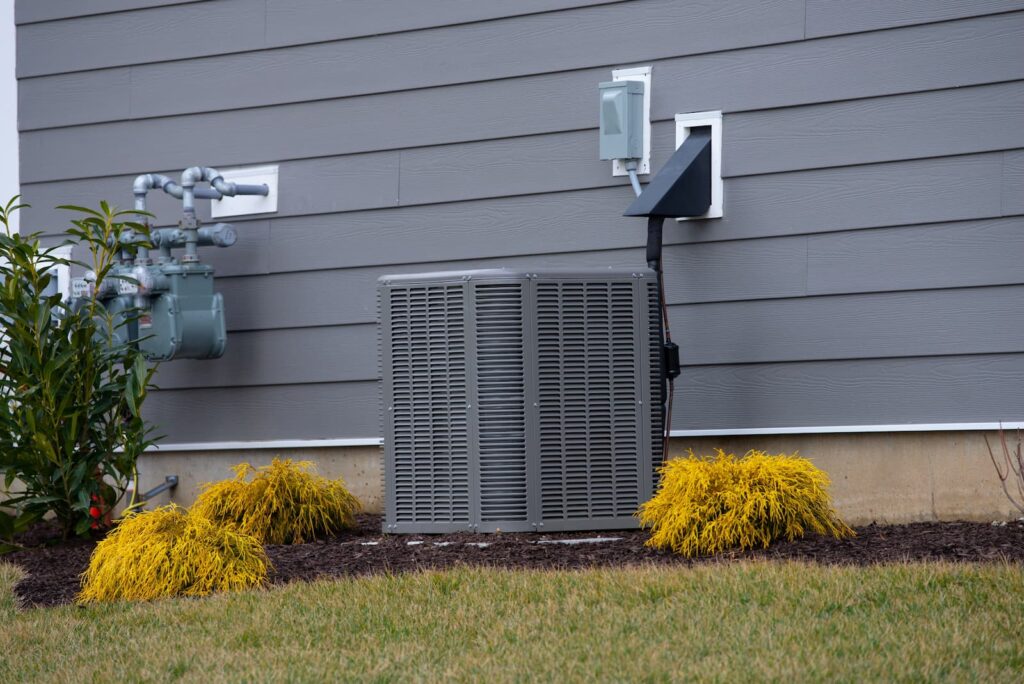
Image Source: Victor Yarmolyuk // Shutterstock
Why is it Important to Clean AC Coils in South Carolina?
Most homeowners are not enthused about AC preventive maintenance, especially in areas where cold weather dominates the summer weather. But there are benefits attached to routine air conditioning maintenance. They include:
Improve Cooling Efficiency
An air conditioner eliminates warm indoor air via a cooling agent and pumps it outside while releasing cool air back into a room. As air constantly passes through the AC coil, dirt and other debris clog it up, lowering the cooling efficiency. Therefore, you should clean your AC coils regularly to discourage dirt buildup.
Minimize Wear on the System
Reduced airflow due to dirt buildup on the coils can cause other parts of an AC system, such as the motors and compressor, to work less effectively. The stress forces the entire AC unit to work harder, leading to parts breaking. Routine maintenance helps avoid this issue, prolonging your air conditioner’s life.
Reduce Service Calls
Wear and tear resulting from an ill-maintained AC coil only increases costly repair calls. When the coils are dirty, they can cause a variety of problems with your air conditioner, such as reduced cooling capacity, increased energy consumption, and shortened lifespan. In addition, if you do experience any issues with your AC, cleaning the coils can often resolve the problem, eliminating the need for a service call altogether. By cleaning your AC coils, you can reduce the frequency of service calls and keep your air conditioner running smoothly and efficiently.
Save Money
Poor AC maintenance routines lead to an inefficient unit that increases energy bills and frequent service calls that may be costly. On the other hand, a well-maintained AC unit uses less energy, requires fewer service calls, and operates optimally throughout its estimated lifespan, saving you money in the long run.
How often should AC Coils be Cleaned?
Few things are as important to your health as the quality of the food you eat, the water you drink, and the air you breathe. However, most homeowners overlook the quality of the indoor air they breathe, especially when they have an air conditioner.
A poorly maintained air conditioner is a recipe for respiratory illnesses due to the buildup of bacteria and mold spores. According to the manufacturer’s recommendation, you should clean your AC coils at least twice a year. However, several factors may necessitate you to increase the time.
- Your location: if you live in an extremely dusty or windy environment, you should clean your AC coils as often as possible.
- Usage: AC units that are used frequently should be cleaned regularly.
- Age: Older AC systems may not operate as effectively as they used to when they were new, hence may need to be cleaned often to operate optimally.
Maintenance best practices for your AC coils involve a combination of easy DIY responsibilities and scheduled professional services.
- Change the filter regularly: The best way to keep dirt off AC coils is to change the air filter at regular intervals. A dirty, blocked filter causes debris to be pulled around it and onto the wet coil.
- Monitor the drain: Foul odors or water leaking from an indoor unit may signify that the condensate drain line is clogged. The line will need to be flushed professionally with a solution that can prevent mold and algae buildup.
- Keep the area around the outdoor unit clean: For proper airflow, maintain at least two feet of clearance from debris like leaves, grass clippings, weeds, and shrubs on all sides.
- Gentle rinsing: A garden hose can be used to give the condenser coils a gentle spray to keep them clean.
- Professional cleaning and inspection: A professional tune-up should be scheduled at least once per year. A technician can safely access and deep clean coils.
When to Call a Professional
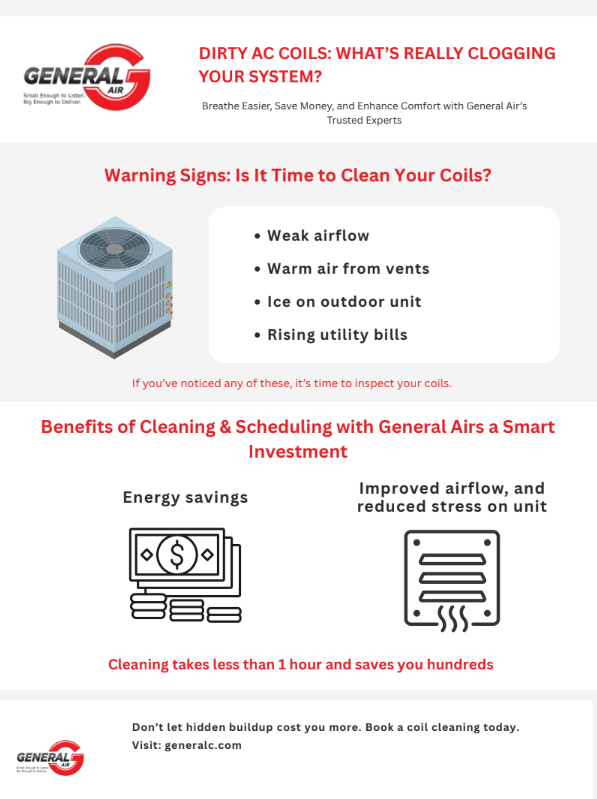
If you notice any of the following changes when you turn your AC on, it might be time to call a professional for AC coil cleaning services.
- Restricted airflow: Insufficient air flow is a common indicator of a blockage due to dirt buildup hence preventing air from circulating through your home.
- Bad smell: It might be a sign of microbial growth.
- Unusual noises: these might signal major issues with your cooling system
- Warm air: If your AC unit is blowing warm instead of cold air, it might signal various issues, such as refrigerant leakage or a malfunctioning compressor.
- Slow to turn on: If your AC takes longer than usual to start up, even when you adjust the thermostat, it is a tell-tale sign to call an expert.
- Water leaks: Small amounts of water could be condensation. However, if a large pool of water is leaking from your AC system, it’s time to call a repair technician.
Choose General Air for Your AC Needs
When it comes to maintaining the performance and efficiency of your air conditioning unit, it’s important to trust the job to a professional. While DIY repairs may seem like a cost-effective solution, they can actually be more dangerous and costly in the long run. Without proper training and expertise, you risk causing further damage to your AC system or even putting yourself in harm’s way.
On the other hand, hiring a professional ensures that the job is done safely and correctly, helping to extend the lifespan of your AC and saving you money on costly repairs down the road. So if you’re in need of AC maintenance or repair in Greenville, SC, be sure to call a trusted professional, like General Air, to handle the job.
We offer the best technology, including GPS tracking, for a client to see where the technician is and what truck they are driving. Contact us today to get a quote and experience the benefits of choosing a professional for your needs.
